We use cookies to make our website work and to optimize customer experience. Clicking “Accept Cookies” means you consent to the collection of all types of cookies. Learn more about our Privacy and Cookie Policy by clicking the “Learn More” link. Accepting all cookies or closing this window is affirmative consent to the collection and use of information as described in the site’s Privacy Policy.
Hair damage and porosity can make strands more prone to frizz, even when humidity is not the whole story. Here is how damage changes the way hair behaves and why repairing it may be an important part of keeping frizz in check.
Humidity has a reputation when it comes to frizz: the main culprit. And to be fair, it has earned it. But if your hair seems increasingly difficult to keep smooth, or products that once controlled frizz suddenly are not cutting it, the weather may not be the only thing working against you.
Damage can change the way hair behaves.
Bleaching, coloring, heat styling, UV exposure, and everyday wear can compromise the hair's internal structure and outer cuticle. As damage accumulates, hair can become more porous and harder to keep smooth.
And that can mean more frizz.
Damage Changes More Than How Your Hair Looks
We tend to think about damage in visible terms: split ends, breakage, dryness, dullness. But damage also changes the physical structure of the hair.
The cuticle, the overlapping outermost layer of the hair, helps protect the internal structure while regulating how easily moisture moves in and out. When those cuticle scales lay flat and are intact, hair tends to reflect light more evenly, feel smoother, and behave more predictably.
When the cuticle becomes disrupted and the internal structure is weakened, the effects go beyond what you can see.
That is when porosity becomes an important part of the conversation.
So, What Exactly Is Hair Porosity?
Hair porosity describes how readily hair absorbs and loses moisture and is typically determined by the condition of the cuticle scales, which overlap each other much like shingles on a roof.
According to a recent study by the International Journal of Trichology, all hair is porous to some degree, and natural porosity varies from person to person. Factors such as age and genetics are contributors to porosity but damage has been shown to significantly increase it.
Highly porous hair often has lifted and damaged cuticle scales, leaving gaps in the protective surface, allowing moisture to move in and out more easily. That is one reason damaged hair may feel dry and brittle even when you are regularly conditioning it: it can absorb moisture quickly but struggle to retain it.
It also makes hair more reactive to what is happening around it.
Which brings us back to frizz.
Why Porous, Damaged Hair Can Be More Prone To Frizz
When hair is damaged and highly porous, humidity has easier access.
Moisture from the air can penetrate the hair more readily, causing it to swell and disrupting the smooth style you worked to create.
But humidity is not required for damage-related frizz to show up.
A rough, damaged cuticle can leave individual strands less smooth and reflective even in relatively dry conditions. Add breakage, dryness, and uneven texture, and what you see in the mirror can register as frizz whether or not there is a cloud in sight.
That distinction matters.
Because if damage is contributing to your frizz, repeatedly smoothing the surface without addressing the damage may only solve part of the problem.
Sometimes Frizz Control Needs To Start With Repair
Repair can mean very different things in haircare, depending on the product and technology.
And damaged hair rarely has just one issue. Bleaching, coloring, heat, and everyday styling can affect both the internal structure of the hair and its protective outer surface.
So if damage is part of your frizz problem, repair needs to be part of the solution.
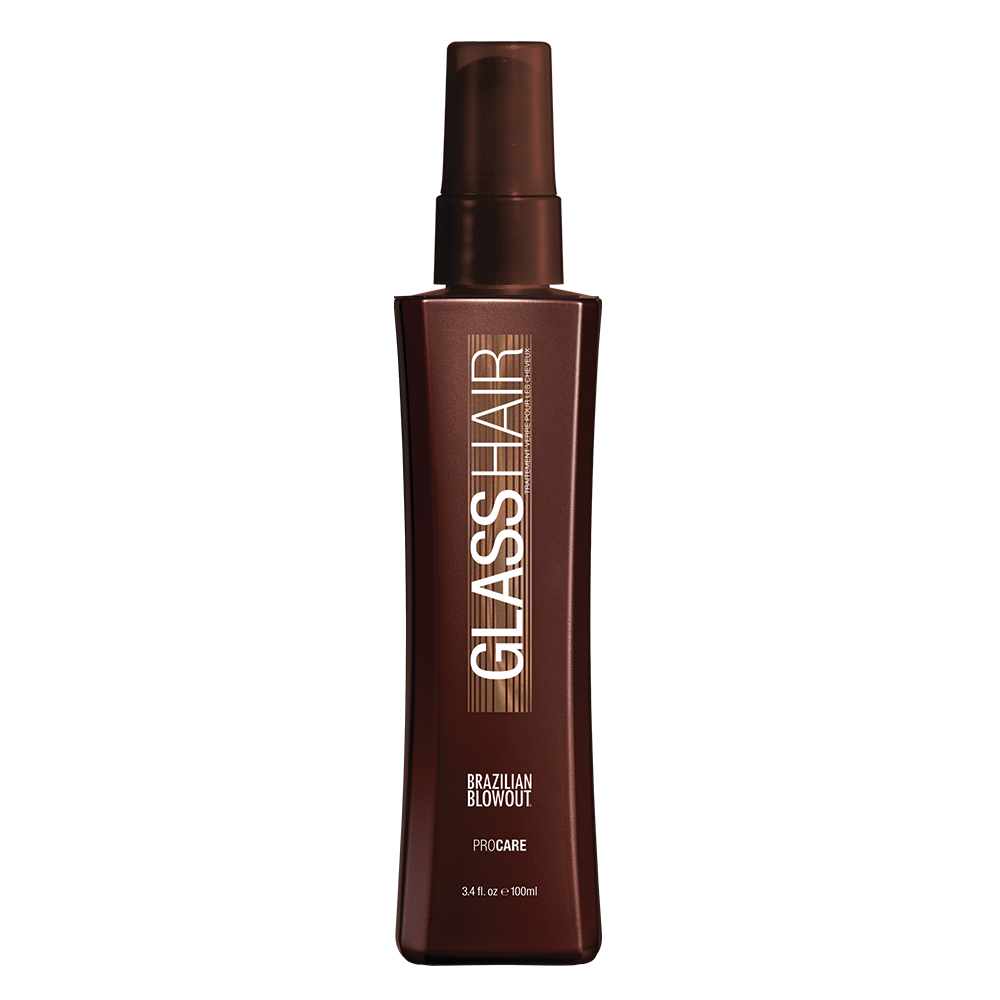
That is where Brazilian Blowout Glass Hair comes in.
Where A Repair Product Fits In
Given the complex nature of damage, the most interesting advances in repair are moving beyond the surface. Newer technologies have been shown to work at different levels in the hair, targeting internal damage while also addressing moisture loss and correcting a compromised cuticle.
Glass Hair is an instant damage repair leave-in that takes this more comprehensive approach. Its bioidentical peptide complex supports internal repair, while a multi-acid moisture system restores hydration and bio-polymers help smooth and restore the damaged cuticle. The combination addresses both the underlying damage and the rough, uneven surface that can make compromised hair of various porosity look and behave differently.
For porous, frizz-prone hair, that matters: improving the health of the hair itself can help address one of the reasons strands frizz in the first place and measurably reduce frizz instantly and over time.
Repair The Damage. Deflect The Weather.
None of this gets humidity off the hook.
If your hair naturally reacts to moisture in the air, anti-frizz styling products can still play an important role in keeping hair looking smooth and uniform. They are simply tackling a different part of the problem.
Repair addresses the causes of damaged hair. Frizz protection helps defend your style against the environment.
Understanding the difference can change how you approach and gain control over both.
Frequently Asked Questions
Can damaged hair cause frizz?
Yes. Damage can disrupt the cuticle and increase porosity, leaving hair rougher, less uniform, and more reactive to moisture. Damage can also contribute to dryness and breakage, which can appear as frizz.
Is porous hair more prone to frizz?
Highly porous hair can be more prone to frizz because it absorbs moisture from the surrounding air more readily. In humid conditions, that can cause hair to swell and disrupt a smooth style.
How can I tell if my hair is damaged or highly porous?
Common signs include roughness, dullness, excessive tangling, recurring dryness, breakage, split ends, and difficulty maintaining a smooth style. Repeated bleaching, coloring, and high-heat styling can also increase porosity over time.
Can repairing damaged hair help reduce frizz?
Yes, when damage is contributing to the frizz. Addressing internal damage, restoring moisture, and restoring the cuticle layer can help create stronger, smoother, healthier-looking hair that is less prone to breakage and damage-related frizz.
Is Glass Hair a bond builder?
No. Glass Hair takes a different approach to correcting damage. Its Bioidentical Peptide Complex supports internal repair, while its Multi-Acid Moisture System helps restore hydration within the cortex and Gloss-Enhancing Bio-Polymers resurface the cuticle and enhance the hair's ability to reflect light.
How often should I use Glass Hair?
Glass Hair is formulated for weekly use on clean, damp hair and easy to use. Apply 4-6 pumps, beginning at the ends and working upward, then comb or brush through before styling. It can be used on all hair types, all levels of porosity and textures.
*Independent clinical studies.
Puede que te interese

Thank you!
Dejar un comentario
Este sitio está protegido por hCaptcha y se aplican la Política de privacidad de hCaptcha y los Términos del servicio.